The Heavens Declare the Glory of God: A Cosmic Testimony
“The heavens declare the glory of God; the skies proclaim the work of his hands.”
— Psalm 19:1 (NIV)
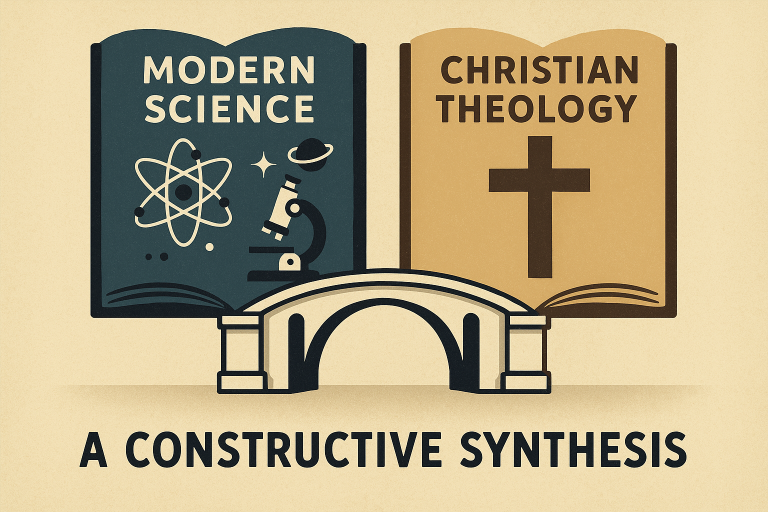
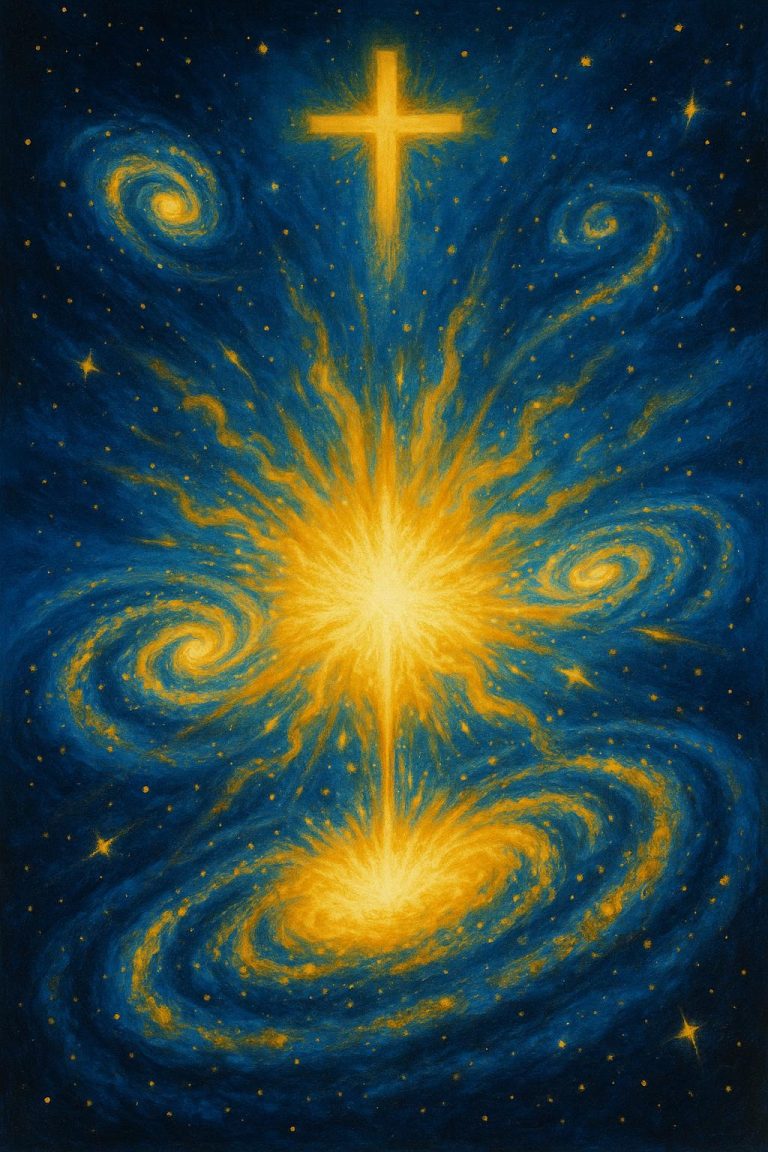
For millennia, humanity has looked up at the stars with a sense of awe, curiosity, and worship. The psalmist David, writing long before telescopes or star charts, captured a timeless truth: the universe speaks—not in words, but in grandeur. What if we took this statement seriously in our modern age? What if the cosmos, as described by physics and astronomy, is not silent, but testifying—visibly and mathematically—to the mind of its Maker?
In this article, we explore how modern cosmology and ancient Scripture both point to a universe that’s not only finely tuned but profoundly intentional—a stage not of random chaos, but divine craftsmanship.
🔭 The Ancient Skywatchers vs. Modern Science
David had no Hubble Telescope, yet he wrote of the heavens as declaring God’s glory. The Hebrew word used here for “declare” (סָפַר saphar) literally means “to recount, to number, to tell.” It implies communication, storytelling. And the sky, from the biblical perspective, is not passive backdrop—it is active revelation.
Modern astronomy has only magnified this idea. From the macrocosm of galaxies to the microcosm of particles, the universe shows astonishing precision and harmony.
- 🌌 The observable universe is around 93 billion light-years across, filled with galaxies arranged in cosmic webs and voids.
- 🎯 Physical constants (like the gravitational constant, speed of light, and fine-structure constant) are incredibly fine-tuned—change them ever so slightly, and life as we know it becomes impossible.
Physicist Paul Davies put it this way:
“The impression of design is overwhelming.”
⚖️ Fine-Tuning and the Anthropic Principle
Imagine walking into a room where every dial is set perfectly for life. You’d be forgiven for thinking someone had been there before you. This is the mystery behind the fine-tuning of the universe.
A few examples:
| Constant | Required Value | Variation Tolerance |
|---|---|---|
| Gravitational Constant | 6.674×10⁻¹¹ | ± 1 in 10⁶⁰ |
| Cosmological Constant | ~10⁻¹²⁰ | ± 1 in 10¹²⁰ |
| Ratio of Electrons to Protons | ~1:1 | ± very slight |
These aren’t just big numbers—they’re razor-thin tolerances. Theologians call this design. Physicists might call it the Anthropic Principle—the idea that the universe’s properties appear as they do because they allow observers like us to exist. But that skirts the question: Why is it that way in the first place?
From a biblical view, the answer is not chance or necessity—it’s purpose.
📡 Cosmic Background Radiation: A Silent Echo of Creation?
In 1965, scientists detected a faint, persistent hum of microwaves from every direction in the sky. This cosmic microwave background radiation (CMB) is considered the “afterglow” of the Big Bang—evidence that the universe had a beginning.
Genesis 1:1 famously opens with:
“In the beginning, God created the heavens and the earth.”
Strikingly, both Scripture and science agree: there was a beginning.
And the universe has been expanding ever since—like a cosmic echo of that first divine command:
“Let there be light.”
🧠 The Language of the Universe: Mathematics
Mathematics is often described as the language of the universe. From orbital mechanics to quantum physics, the cosmos behaves according to abstract, elegant rules that can be written in symbols and equations.
Theologian and mathematician John Lennox writes:
“The more we understand the universe, the more it appears to be underwritten by intelligence.”
Why should abstract math describe the physical world so precisely? Why does the universe seem “comprehensible” at all?
Psalm 147:4 says:
“He determines the number of the stars and calls them each by name.”
Mathematics, far from disproving God, may in fact be the fingerprint of the Logos—the divine logic through which all things were made (cf. John 1:1–3).
🧬 The Earth: A Privileged Planet?
Despite the vastness of space, Earth remains strangely just right for life. We orbit a stable star, in a safe zone of our galaxy, with the perfect atmosphere, magnetic shielding, liquid water, and an astonishingly rare Moon that stabilizes our tilt and tides.
Isaiah 45:18:
“He did not create [the earth] to be empty, but formed it to be inhabited.”
The Privileged Planet Hypothesis posits that Earth is not only ideal for life but also ideal for observation. We live in a universe that allows us to discover and ponder its structure—a trait not required for survival, but perfectly aligned with a Creator who wants to be known.
💬 Conclusion: Creation Is Not Silent
Psalm 19 doesn’t stop at verse 1. It goes on:
“Day after day they pour forth speech; night after night they reveal knowledge. They have no speech… yet their voice goes out into all the earth.”
This is poetic, but also strangely modern. The heavens do speak—not with syllables, but with data. With photons, neutrinos, gravitational waves, and background radiation. With spiral arms and supernovae and quantum fluctuations.
And if we listen carefully, we may hear, behind the silence, a familiar voice whispering:
“I am here. I made this. I made you.”
Suggested Further Reading:
- Hugh Ross, The Creator and the Cosmos
- John Lennox, God’s Undertaker: Has Science Buried God?
- Guillermo Gonzalez & Jay Richards, The Privileged Planet
- Roberto und Manuela Vitali, Das Evangelium am Himmel